My Background
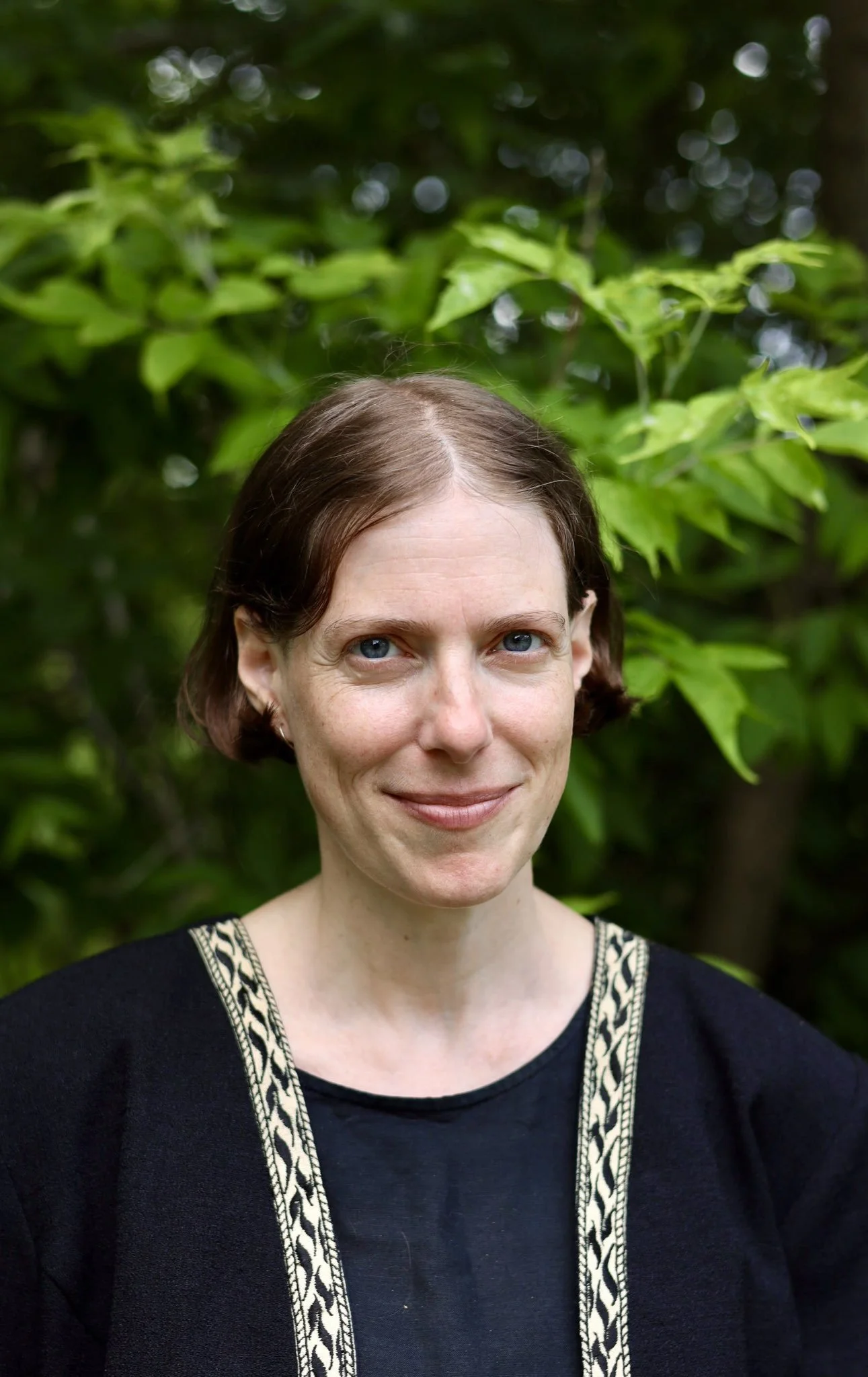
I’m a member of the Ordre des acupuncteurs du Québec. I practice Saam acupuncture, a Korean style of acupuncture, as transmitted by Toby Daly, with whom I completed an internship in California. I also enriched my practice through several complementary internships with Ethan Murchie in Tuina at the Montreal Gongfu Research Center.
My approach is distinguished by an attentive listening, keen intuition, and deep respect for each person's own rhythm. With a background in the arts, I bring a particular sensitivity to the creative and fluid dimension of healing. I approach each treatment with curiosity and engagement, leaving space for what emerges in the moment.
I gently support people living with, among other things, chronic pain, insomnia, anxiety, fatigue, or digestive and menstrual imbalances. I’m also attentive to the realities of people from diverse cultures, genders, and backgrounds.
I practice in both French and English. My intention is to offer a safe space where people feel heard, relaxed, and revitalized.
My Practice
Saam Acupuncture
I practice a branch of Korean acupuncture dating back to the 17th century, known as Saam (or Sa'am). Over time, this method evolved and gave rise to several distinct lineages. The one I practice was introduced to America by Toby Daly, an American acupuncturist who himself received it from his teacher, a wandering monk he met during his travels over thirty years ago.
The channels we work with, along with their associated organs, are the same as those found in Chinese or Japanese acupuncture. These channels are not abstract lines drawn on the body, "meridians", but real pathways running through muscles, tendons, and tissue, like a network of rivers and streams carrying Qi and blood throughout the body. The difference lies in how these channels are organized in relation to one another, how they're visualized, and the type of message being sent to the body.
Each channel functions as an archetype. It represents both a physical pathway with its paired organ and function, and also an inner energy or climate, a deep internal movement that we can influence through needling. If we think of the human body as a garden, it needs several elements to thrive: earth to anchor its roots, water and sun to nourish the soil, wind to scatter its seeds, warmth to awaken insects and stir life into motion. In the logic of balance, it also needs dryness and cold, to temper excess and allow the cycle to begin again. Saam acupuncture can be thought of in the same way, as a means of balancing the elements within the body, so that each organ functions optimally and Qi and blood flow freely through the channels.
This technique relies on the use of four needles, placed on one side of the body only (left or right). At times, needles are also added on the other side, up to a maximum of four. Why four? Simply put, these needles send a clear message to the body, somewhat like launching a computer program. It's the combined action of these four needles that generates the internal movement needed to rebalance the body.
Tuina
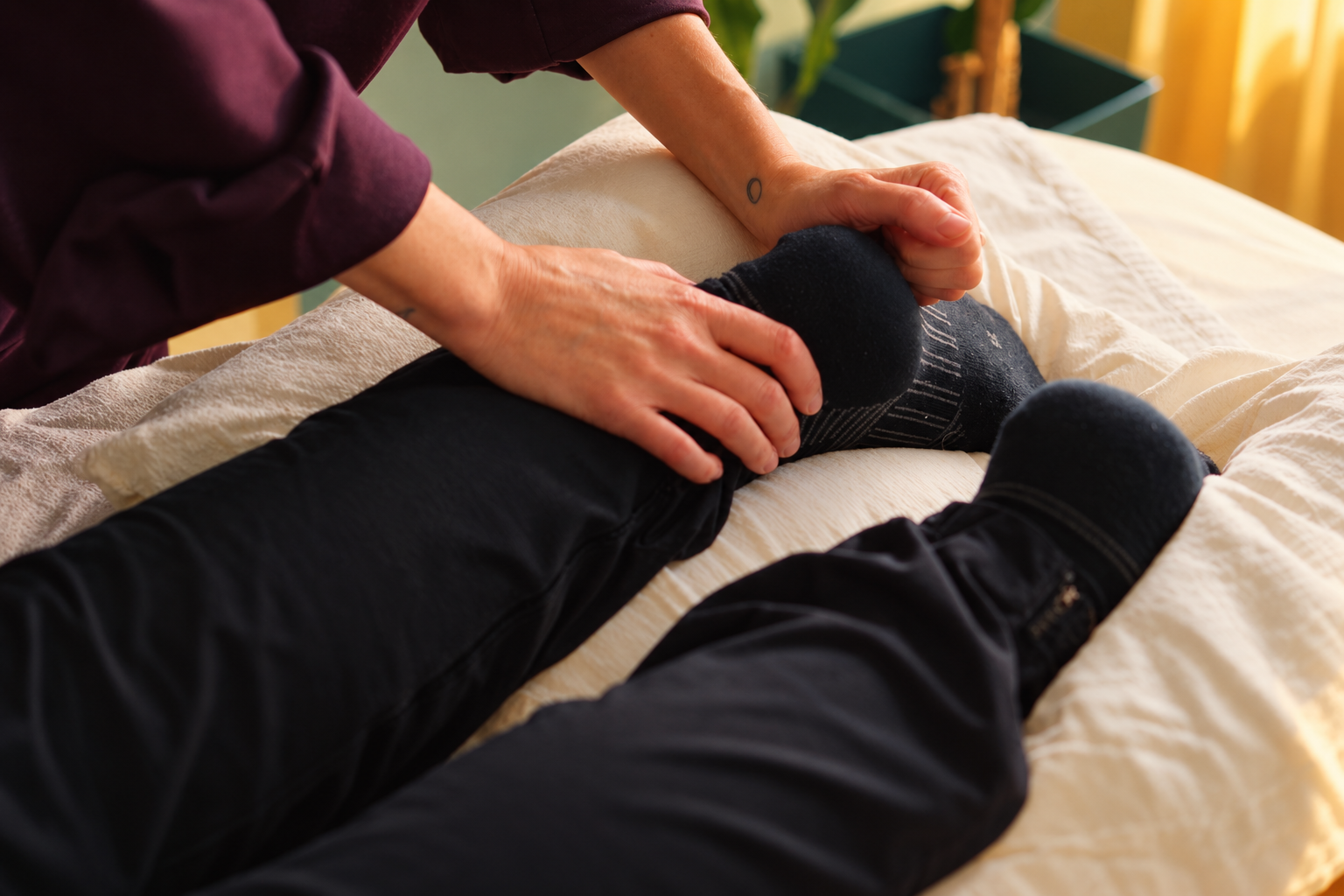
I also practice Tuina, a manual therapy rooted in traditional Chinese medicine, as taught at the Montreal Gongfu Research Center by Ethan Murchie. This practice is distinct from massage in the conventional sense. The term Tuina literally means "push" (tui) and "grasp" (na): using a variety of manipulations (rolling, pressing, mobilizing) we work both on a physical level, addressing soft tissue and joints, and on a circulatory level, by directly stimulating the meridians. This treatment is done fully clothed, ideally in loose-fitting clothing.